

Material reuse & resource recovery
Country: Denmark
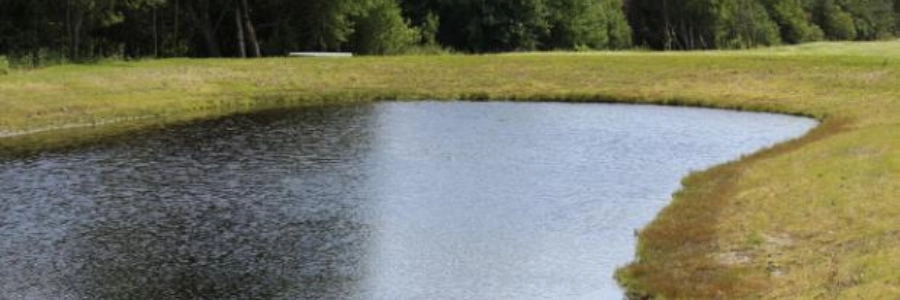
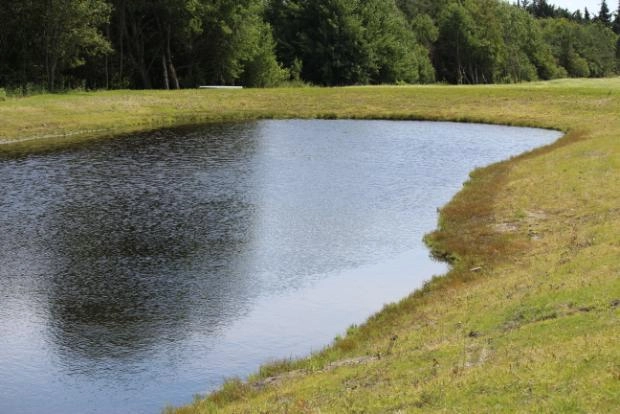
Reuse of sediment from rainwater basins for farm soil improvement
PROJECT BRIEF OVERVIEW
| City, Country | Tønder (and others), Denmark | |
|---|---|---|
| Title | Rainwater pond sediment as farm soil improvement | |
| Lead Organisation | Various wastewater utilities across Denmark | |
| Associated Partners | Waste transportation companies, municipalities, farmers | |
| Implementation period | Ongoing practice | |
| Web site | N/A | |
| Contact person or (and knowledge agent) | Anne Margrethe Brink, Tønder Forsyning (Tønder wastewater utility) www.tonfor.dk info@tonfor.dk +45 88 43 75 00 | |
| Purpose | Reuse of rainwater pond sediment | |
| Keywords | Waste management, Rainwater pond management, Sediment, Fertiliser, Farmland, Soil improvement, waste water management | |
| Required Competences | Environmental engineering, sediment analysis, waste management, Environmental legislation, stakeholder engagement. | |
| Budget | Sampling of sediment: | 5-6.000 DKK/sample |
| Disposal of sediment (Cerca prices as of 2025 – all are per ton dewatered sediment): | ||
| To farmland: | 300 DKK/ton | |
| To waste handling company (as polluted soil): | 750 DKK/ton | |
| To land fill (heavily polluted soil): | 1000 DKK/ton | |
DETAILED PACTICE DESCRIPTION (incl. drawing, diagrams and photos)
Sediment from rainwater ponds can be considered as sewage sludge in accordance with the Danish Waste-to-soil statutory act3. If the sediment lives up to a series of limit values covering organic micropollutants and heavy metals, it is considered a waste compound eligible for reuse on farmlands.
The benefit for the wastewater company is a reduction of waste that may otherwise be disposed of at landfills or in facilities that treat polluted soil – which is more costly than application on farmlands.
The benefit for the farmer is a product that can have both nutritional value as well as be improving to the soil – while the farmer is being paid for accepting the sediment.
The environmental benefit is recirculation of nutrients and potential soil improvement, a reduction in the use of industrial fertilisers, and reduction of waste being disposed of at landfills. Below follows a step by step walk through.
Step by step description of the practice:
1: Dredging and dewatering of sediment
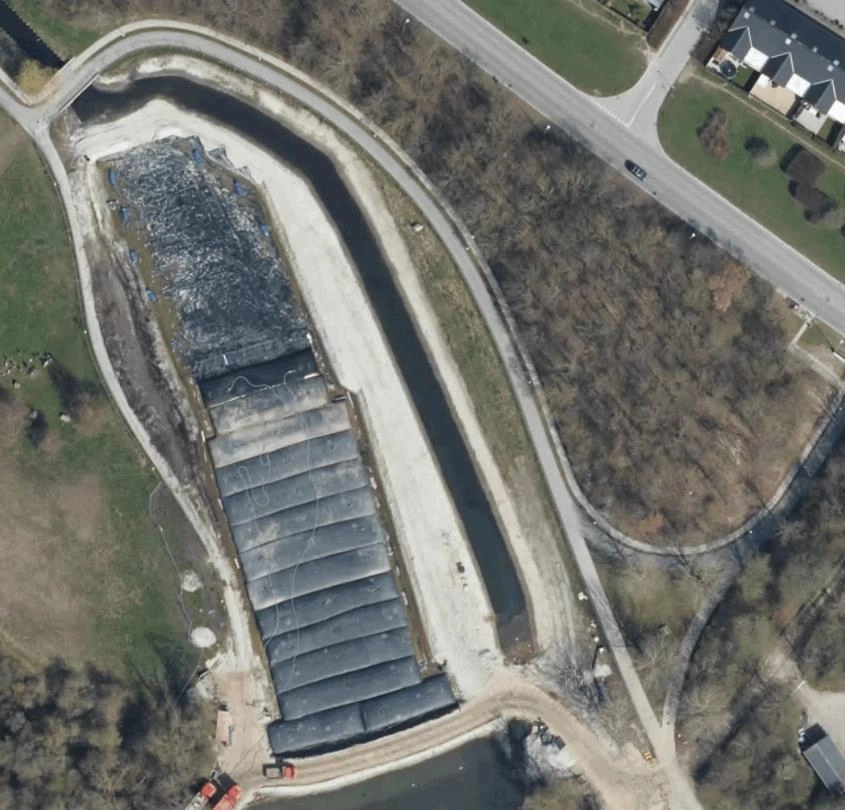
Sediment from rainwater ponds is dredged and dewatered. The dewatering can take place on site, off-site, in Geotubes or directly on the ground. This part of the task is the responsibility of the wastewater company who often subcontracts the concrete work to a private company. If possible, dewatering takes place on site, and dredged water is emitted back into the pond.
If for some reason the dewatering cannot take place on site, the dredged sediment is transported to a facility for dewatering, or straight to the receiving farmer. Since this will mean transportation of large quantities of water and a considerably higher price for disposal of the sediment, this is not the norm.
2: Sampling and testing of dredged sediment:
The sediment needs to conform to a series of limit values for micropollutants and heavy metals before it can be applied to farmland (more on the limit values in next section). It is the responsibility of the wastewater company to ensure that these analyses are obtained. The analyses are performed by an accredited laboratory.
If the sediment does not conform with the limit values, it cannot be applied to farmlands and must be disposed of in a different way. Regulations specifiy how many samples are needed depending on the size of the batch of sediment. This, however, varies from country to country and is therefore not discussed in further detail.
3: Transport of sediment to receiving farms:
A waste transportation company transports the (usually) dredged sediment to a farm. Here the sediment is mixed with manure before being spread on the farmlands, in accordance with legislation regulating the spread of manure and fertilisers.
TYPES OF CONTAMINANTS AND THEIR IMPACT - LIMIT VALUES AND POTENTIAL OTHER USES
This section covers the limit values for micropollutants and heavy metals in sewage sludge in Denmark - including sediment - that must be adhered to for the sludge to be applied on farmlands. If the sediment does not conform to these limit values, it cannot be applied to farmland.
Limit values for heavy metals
| mg/kgDM4 | mg/kg.TP5 | |
|---|---|---|
| Cadmium | 0,8 | 100 |
| Mercury | 0,8 | 200 |
| Lead | 120 | 10.000 |
| Nickel | 30 | 2.500 |
| Chromium | 100 | - |
| Zink | 4.000 | - |
| Copper | 1.000 | - |
Limit values for micropollutants
| Compound | Limit value (Mg/kg DM) |
|---|---|
| LAS1) | 1.300 |
| Σ PAH 2) | 3 |
| NPE 3) | 10 |
| DEHP4) | 50 |
| Σ PCB7 5) | 0,2 6) |
For each compound listed in Table 2 the analyses must conform with the limit values stated.
Potential other uses
Sediment that does not conform with the above-mentioned limit values cannot be spread on farmland. In this case there are other potential pathways for the sediment, which will be covered here, though not in detail.
A company that handles polluted soil and other similar waste products may accept the sediment. In this case it is treated as a form of polluted soil and undergoes treatment to reduce the concentrations of pollutants. It is possible to clean the sediment to a level where it can be used in several construction projects, that does not require completely clean soil in accordance with the soil pollution regulations. This is mostly the case if the limit values for organic micropollutants are exceeded.
If the exceedance of limit values is due to heavy metals, it may not be possible to reuse the sediment. In this case the sediment is disposed off in landfills.
ENVIRONMENTAL IMPACT
The practice of reusing sediment on farmland has the key environmental benefit of turning a waste compound into a resource and thus reduce the amount of waste that ends up in landfills. Even sediment that does not live up to the limit values according to the Waste-to-soil statutory act may still be reused. This, however, is not covered in detail in this case.
The nutrient value of the sediment can also lead to a reduction in the use of industrial fertilisers, though the nutrient value of sediment can be rather small.
The balance between organic and inorganic compounds in the sediment may also have a positive effect on the soil it is applied to, such as improving the water retention of the soil or, conversely, making the soil more permeable for water. In this example, based on the practice in Tønder municipality in Southern Denmark, the soils are generally rather sandy, so the application of sediment with its expected contents of sand is assumed to make relatively little difference to the soil.
ECONOMICAL IMPACT
The wastewater company pays to have the sediment applied to farmlands. This is however cheaper than having the sediment disposed off at a landfill.
Tønder Utility has supplied the following prices regarding sampling and testing of the sediment, as well as expenses for disposal of the sediment to farmers, waste handling companies or landfills. Table 3 below gives an overview of the prices for sampling, testing and disposal of sediment. It is followed by a walkthrough further below.
| Prices for handling of sediment | |
|---|---|
| Sampling and testing of sediment: | 5-6.000 DKK/sample |
| Disposal of sediment (Cerca prices as of 2025 – all are per ton dewatered sediment): | |
| To farmland: | 300 DKK/ton |
| To waste handling company (as polluted soil): | 750 DKK/ton |
| To land fill (heavily polluted soil): | 1000 DKK/ton |
Sampling and testing:
Sampling and testing is handled by an accredited laboratory such as Eurofins, SGS analytics (just to name examples) or similar. They sample and test the sediment according to the above-mentioned limit values.
It has not been possible to state a more specific price, since they are regularly changed.
As mentioned earlier regulations specify how many samples must be taken depending on the batch-size of sediment – in this case how many tonnes of sediment is being sampled. One batch of sediment may therefore require several samples, and the final cost of sampling and testing will vary with the amount of sediment.
Disposal of sediment:
Apart from the environmental benefit, what is interesting about disposal of sediment on farmland is the economic aspect – it is a cheaper option. The general prices are mentioned in Table 3 above. All prices approximate price for 2025, and they may vary.
Disposal on farmland:
Disposal of sediment on farmland is the cheapest option for the utility. It is also the most direct reuse of the sediment, with the least amount of treatment before reuse.
Disposal at waste treatment companies (as lightly polluted soil):
If the sediment fails to conform with the previous mentioned limit values for organic micropollutants and heavy metals but still conforms with limit values for what in Danish can be called lightly polluted soil, it may be handed over to a waste handling company such as Blue Phoenix (example). They charge a price to accept and treat the soil. When treated, the sediment may be reused on construction projects such as for landscaping, sound barriers or other places where soil with its levels of contaminants may be used.Disposal at landfills (heavily polluted soild):
The most heavily polluted sediment will be disposed of at landfills. This is the sediment that cannot be treated to in any way live up to the regulations regarding polluted soil and must therefore be disposed off in a safe way.
A final note should be made regarding the transport of the sediment. It has not been possible to find out about this matter but it is naturally important – especially if the transport distances are long.
LESSONS LEARNED, LEVEL OF COMPLEXITY IN IMPLEMENTATION
There are two areas that can be the main challenges regarding this practice.
1: Legislative issues
It is up to an individual assessment whether the sediment from a rainwater basin can be considered sludge that falls under the Danish Waste-to-soil statutory act. It is not clearly defined in any guidelines to the legislation and therefore it may, under other circumstances, be considered as another type of waste and therefore not fall under this legislation. This is important as the Waste-to-soil statutory act offers a more direct pathway for wastes to be applied to farmland rather than going through a more complex process of permits and so on. This issue may be a unique Danish one since it is directly connected with Danish legislation.
2: Farmers willing to accept the sediment
A second challenge is the question of whether local farmers are willing to accept the sediment. On one hand they get paid to accept it, however, the farmer has to evaluate the consequences of applying the sludge to their farmland – i.e. whether it has a positive or negative impact. It is also preferable if the farms are situated near where the sediment is being dug up. This is both a matter of transportation, and it is generally easier to keep the sediment within the same municipality as it will involve fewer authorities.
LINKS AND REFERENCES
Bekendtgørelse om anvendelse af affald til jordbrugsformål
Anne Margrethe Brink, Tønder Utility, personal communication, October-December 2025
Waste management
Rainwater pond management
Sediment
Fertilliser
Farmland
Soil improvement
Waste water management
