

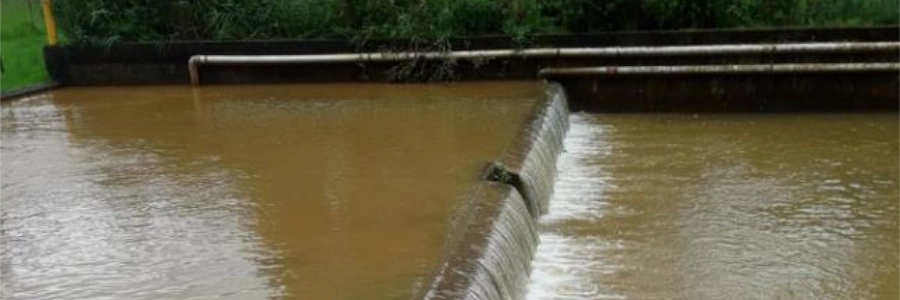
Material reuse & resource recovery
Country: Denmark
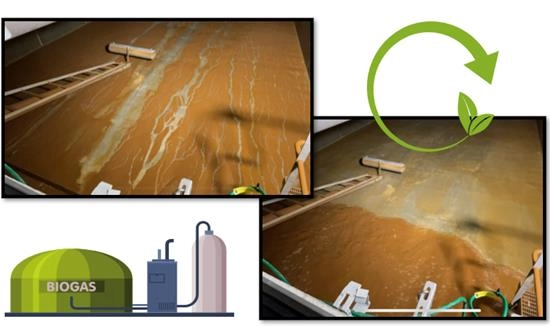
Ochre sludge from drinking water production as additive in biogas production
PROJECT BRIEF OVERVIEW
| City, Country | Aarhus, Denmark | |
|---|---|---|
| Title | Ochre sludge as an additive for phosphorous and hydrogen sulfide precipitation in biogas plants | |
| Lead Organisation | Drinking water utilities across Denmark | |
| Associated Partners | Biogas plants. | |
| Implementation period | Ongoing practice | |
| Web site | https://www.aarhusvand.dk/ (No project website – link to the company that performs this practice) | |
| Contact person or (and knowledge agent) | Bo Vægter Aarhus Vand +45 89471000 Aarhusvand@aarhusvand.dk | |
| Purpose | Reuse of ochre sludge | |
| Keywords | Ochre sludge, Waste management, Biogas. Waste water treatment, Phosphorous, Hydrogen sulphide (H2S) | |
| Required Competences | Environmental engineering, sediment analysis, waste management, Environmental legislation, stakeholder engagement. | |
| Budget (as listed in Hummelshøj, 2024) Converted to EUR1 | Disposal as waste (current practice - average): | 111 EUR/ton |
| Transport to biogas plant: | 54-84 EUR/ton | |
| Fee charged by the biogas plant: | 0 EUR/ton2 | |
DETAILED PRACTICE DESCRIPTION (incl. drawing, diagrams and photos)
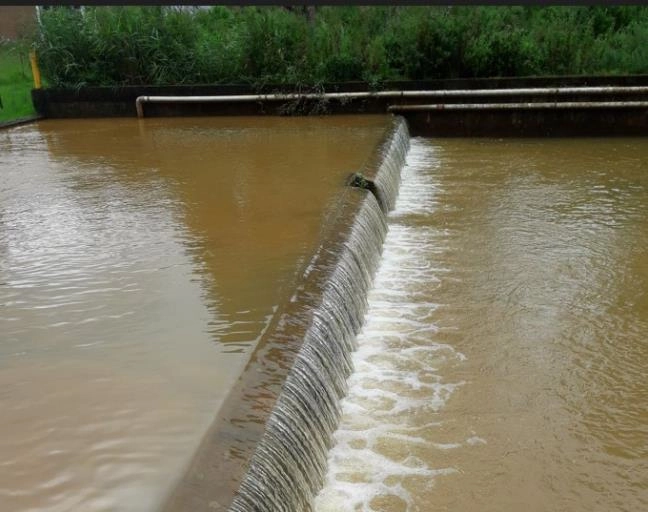
Ochre sludge is a by-product of drinking water production is high in iron oxides (ochre). Traditionally it is considered a waste material. However, the iron oxides can be used for reducing the hydrogen sulphide (H2S) contents in biogas plants, as well as in wastewater systems.
For biogas plants and wastewater treatment utilities the sludge can supplant more expensive industrially produced chemicals for precipitation of phosphorous and hydrogen sulphide, thus leading to reduced operational costs.
Legal uncertainties regarding the classification of ochre sludge as a waste product as well as arsenic concentrations may be prohibitive for the practice.
This case outlines the steps of the changed practice as well as the legal, economical and environmental aspects.
Current practice
Ochre sludge is a waste product of drinking water production in Denmark. The main metal precipitated in the sludge is iron, but there are also elements such as manganese, arsenic and others. Table 1 gives an overview of the chemical composition of ochre sludge in Danish water works.
Traditionally the sludge is considered a waste product, that is to be disposed of as easily and cheaply as possible, often at landfills. This may be the only option if there is a high concentration of pollutants such as arsenic. However, disposal at landfills, while easy, is not necessarily a cheap option.
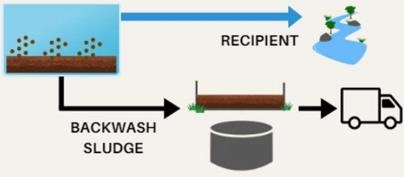
Steps for reuse in a biogas plant (example):
Steps for reuse in a biogas plant (example):
Below follows an example on the reuse of ochre sludge in a biogas plant. This is a simplified description of the key steps that are relevant to follow when attempting to reuse ochre sludge. Regional differences and practices – especially difference in legislation – may affect the process. After this follows a more in-depth discussion of potential ways of reusing ochre sludge directly.
1: Analysis of the sludge
Before it can be decided whether to reuse the sludge or not it must be analysed for pollutants. A key pollutant is arsenic, but other pollutants may be relevant depending on the current legislation.
Provided the sludge lives up to the relevant legislation it can be reused3.
Also, generally, the arsenic concentration in the sludge should be <40 mg/kg DM for it to be applicable to biogas plants (Hummelshøj, 2024).
2: Transport to receiving biogas plant
At the expense of the waterwork the sludge is transported to a receiving biogas plant.
3: Reuse at the biogas plant
The biogas plant uses the sludge in its production where it reduces the use of industrial chemicals or the strain on a biological filter. Biogas plants may charge a fee to the waterwork for accepting the sludge but this fee is considerably lower than the price of disposal at a landfill.
As mentioned this is a simplified description of how ochre sludge can be reused in biogas plants. Complicating steps are:
- Concentrations of pollutants – especially arsenic
- Regulatory limitations – and especially the willingness of local authorities to allow the reuse
- Price – the prices mentioned are average prices. See Economic section for more in-depth information.
Potentials for reuse – in-depth desciption
Ochre sludge from drinking water production can be reused in biogas production and wastewater systems and replace industrially produced chemicals. This can be a cheaper option of disposal for the drinking water company – as well as a cheaper option for the receiving wastewater company or biogas plant.
Reduction of hydrogen sulphide in wastewater systems and biogas plants:
Hydrogen sulphide is a naturally occurring by-product in biogas production and can be produced in under anaerobic conditions in stagnant wastewater in pressurized systems. It is corrosive, foul-smelling (often the source of the smell of rotten eggs) and potentially explosive in worst-case scenarios. For these reasons wastewater companies and biogas plants seek to reduce the concentrations of H2S in their systems.
A common practice is precipitation with iron chloride or the use of biological filters (mostly in biogas production).
Since iron is the active agent in precipitation of H2S the ochre sludge can be used as a substitute for the industrially produced iron chloride – potentially at a lower cost.
Precipitation of phosphorous in wastewater plants
Wastewater companies are regulated with strict limits on the concentration of phosphorous in the effluent from the treatment plants.
A common method of reducing the phosphorous concentration in the effluent is through precipitation with chemicals such as iron chloride, where the iron reacts with phosphorous to form iron phosphates that settles with the sewage sludge. These chemicals are bought as industrially produced chemicals.
Like the situation with hydrogen sulphide, substituting i.e. iron chloride for ochre sludge can be a potentially profitable method of disposal for the drinking water company as well as a cheaper option for the wastewater company, while reducing the amount of sludge that is disposed off at land fills.
Reducing H2S emissions from biogas plants
Hydrogen sulphide (H2S) is a malodorous and potentially toxic gas, which is unwanted in the biogas production of methane (CH4). Again, ochre sludge from drinking water plants can aid in the reduction of H2S production and substitute industrially produced chemicals otherwise applied to reduce H2S production.
TYPES OF CONTAMINATION AND THEIR IMPACT (components and pollutants in ochre sludge as wells a legal barriers)
This section covers the general composition of ochre sludge in terms of concentrations of iron, manganes, arsenic and other common elements in the sludge. It also describes barriers for reuse in terms of pollutants (e.g. concentrations of arsenic above limit values) as well as legal issues.
Common chemical composition in ochre sludge:
Table 1 below is based on data from waterworks producing around 50% of Denmark’s drinking water (Hummelshøj, 2024). It is therefore assumed to be applicable to Danish waterworks in general. While the percentage share of Arsenic (roughly 0.5%) is low, out of the total mass, it is still a key pollutant in relation to the limit values set by Danish regulation. On average the concentration of arsenic in ochre sludge is cerca 382 mg As/kg DM, which is rather high on a world scale (Hummelshøj, 2024).
| Compound | Percentage share of total mass (average) |
|---|---|
| Iron oxide (Fe2O3) | 50 |
| Organic matter | 16 |
| Calcium oxide (CaO) | 7 |
| Phosphorous oxides (as P2O5) | 4.4 |
| Manganese oxide (as MnO) | 2.9 |
| Magnesium Oxide (as MgO) | 1 |
| Nitrogen (N) | 0.4 |
| Strontium Oxide (SrO) | - |
| Sodium oxide (Na2O) | - |
| Potassium oxides (as K2O) | 0.4 |
| Arsenic oxides (as As2O3) | 0.5 |
| Other heavy metals | 0.01 |
Barriers for reuse:
A main barrier for the use of ochre sludge is the concentration of arsenic (As). Arsenic is a toxic compound and potentially carcinogenic to humans. Therefore, municipalities set limits on the concentration of arsenic in ochre sludge to be reused – often at either 20 mg/kg DM or 1.000 mg/kg DM (From et al., 2014). These limits are based on limit values found in Danish legislation regarding polluted soil hence waste (From et al., 2014).
Another main barrier is legislation itself. As mentioned above the limit values for reuse of ochre sludge can be based on both legislation regarding polluted soil and waste legislation – two types of legislation that may not at first seem particularly closely related. There is no consensus on what legislation to regulate the reuse of ochre sludge after. Hummelshøj, 2024 reports 5 different pathways for ochre sludge based on different interpretations of the current legislation combined with the arsenic levels alone.
ENVIRONMENTAL IMPACT
The environmental impact of reuse of ochre sludge is two-fold:
Firstly, it reduces the amount of sludge that is disposed of as waste in a landfill, which is the current main practice.
Secondly it increases circular economy practices by reusing this waste product (for the drinking water company) in either biogas plants or in wastewater treatment. Here, it helps decrease the use of industrially produced chemicals for precipitation of phosphorous or hydrogen sulfide.
ECONOMICAL IMPACT
There is no single calculation of the economical impact of reusing ochre sludge in biogas production as it depends on accessibility to a plant willing to accept the sludge, contamination levels, and other potential uses.
Hummelshøj, 2024 lists it as follows:
| Action | Price |
|---|---|
| Disposal as waste (current practice - average): | 111 EUR/ton |
| Transport to biogas plant: | 54-84 EUR/ton |
| Fee charged by the biogas plant: | 0 EUR/ton4 |
Aarhus Vand – the water and wastewater utility of the municipality of Aarhus – reports:
| Action | Price |
|---|---|
| Disposal at landfill | 134 EUR/ton |
| Disposal at biogas plant (fee) | 40 EUR/ton |
| Transportation (up to) | 47 EUR/Ton |
While there are some differences between the expenses reported by Hummelshøj, 2024 and Vægter, 2025 it is worth noticing that in both cases reusing ochre sludge at biogas plants is considerably less costly than disposal at landfills.
LESSONS LEARNED, LEVEL OF COMPLEXITY IN IMPLEMENTATION
There are three main issues to overcome, when reusing ochre sludge from drinking water production:
1: Pollutants
The concentration of pollutants, mainly arsenic, may be prohibitive for reusing the sludge in other facilities.
2: Efficiency of the iron oxides
The iron oxides in ochre sludge are not necessarily as reactive as industrial chemicals, i.e. iron chlorides, for phosphorous or hydrogen sulphide precipitation, leading to a greater volumetric consumption compared to pure industrial chemicals. This is a question that has not been researched in depth yet, but it is likely that ochre sludge is less effective at binding H2S and phosphorous compared to industrial chemicals.
3: Legislative barriers
Legislation, among this the uncertainty regarding which legislation covers the reuse of ochre sludge, is a key barrier to reusing ochre sludge. As mentioned earlier ochre sludge can be covered by varying legislation with different limit values on the concentration of arsenic in the sludge.
Aarhus Vand reports that authorities are hesitant to permit the reuse of ochre sludge in biogas facilities as it can be seen as a way of diluting the concentration of arsenic to a level which lives up to limit values (Vægter, 2025).
Receiving and using ochre sludge at a biogas plant must be covered by its Environmental permit which is covered in Denmark by The Danish Environmental Protection Act, which is, in part, an implementation of the EU Industrial Emissions Directive (Directive 2010/75/EU).
LINKS AND REFERENCES
DANVA, 2011; Vejledning i håndtering af okkerslam - DANVA VEJLEDNING NR. 84, 2011 – online: 20110506-vejledning-okkervejledning-cf.pdf (last seen: 17-10-2025)
From et al., 2014; N. From, H. Topholm, C. Eriksen, E.C. Wormslev & L. Høibye, ”Symbiose muligheder for okkerslam” (generisk case), Dansk Symbiosecenter, 2014 – online: https://symbiosecenter.dk/wp-content/uploads/2018/06/Okkerslam.pdf - last seen: 14-11-2025.
Vægter, 2025; Bo Vægter, Aarhus Vand, personal communication, 14-11-2025
Hummelshøj 2024; Thea Schjær Hummelshøj, Waste Streams in Danish Drinking Water Supply - Backwash Sludge and its Recycling Applications, Master Thesis M.Sc. Environmental Engineering, DTU Sustain, June 2024 – not published – copy available on request to andh@via.dk.
Ochre sludge
Waste management
Biogas
Waste water treatment
Phosphorous
Hydrogen sulphide (H2S)
